How to Clean and Maintain Your E-Bike After a Fall Ride in Colorado
Ride Colorado
Cool mornings, golden cottonwoods, and a little mud on the downtube, fall is one of the best times to ride in Colorado. It is also the season when Front Range dust turns to grinding paste, snowmelt splashes onto battery mounts, and mountain descents put extra wear on brakes, chains, and bearings.
Introduction: The Magic and Mess of Colorado Autumn Riding
Autumn along the Front Range can change fast. You might roll out under blue sky in Boulder, cross a damp bike path lined with leaves, and finish with sleet blowing over the foothills. That mix is beautiful, but it is hard on an eBike.
The biggest issue is not a little dirt. It is what Colorado dirt becomes when moisture, road treatment, and temperature swings get involved. Fine grit sticks to chain lube, mag-chloride residue clings to metal parts, and overnight cold can leave moisture sitting in places you do not want it.
If you ride regularly in places like Denver, Fort Collins, Boulder, or Estes Park, a simple post-ride routine goes a long way. The same kind of weather shifts you might notice on our Boulder's Best eBike Tour, Fort Collins eBike Tour, or Estes Park eBike Tour are the reason fall maintenance matters so much here.
The Front Range Challenge: Understanding Mag-Chloride and Abrasive Mud
Colorado roads and shoulders often get treated with magnesium chloride, usually called mag-chloride, when cold weather moves in. It helps with traction and ice management, but it leaves behind a film that attracts moisture and can speed up corrosion on bolts, chains, rotors, and battery contacts.
On trails and mixed-use paths, the problem changes shape. Front Range mud often looks harmless, but it usually contains fine sand and crushed gravel that work like sandpaper once it dries on your drivetrain. If you ride near Boulder Creek, around Denver after a wet cold snap, or on paved routes near mountain runoff in Estes Park, that abrasive layer can build up fast.
A quick wipe is rarely enough after these rides. The goal is to remove grit and chemical residue before they keep working on your bike overnight.
Step 1: The Gentle Rinse (Avoiding High-Pressure Pitfalls)
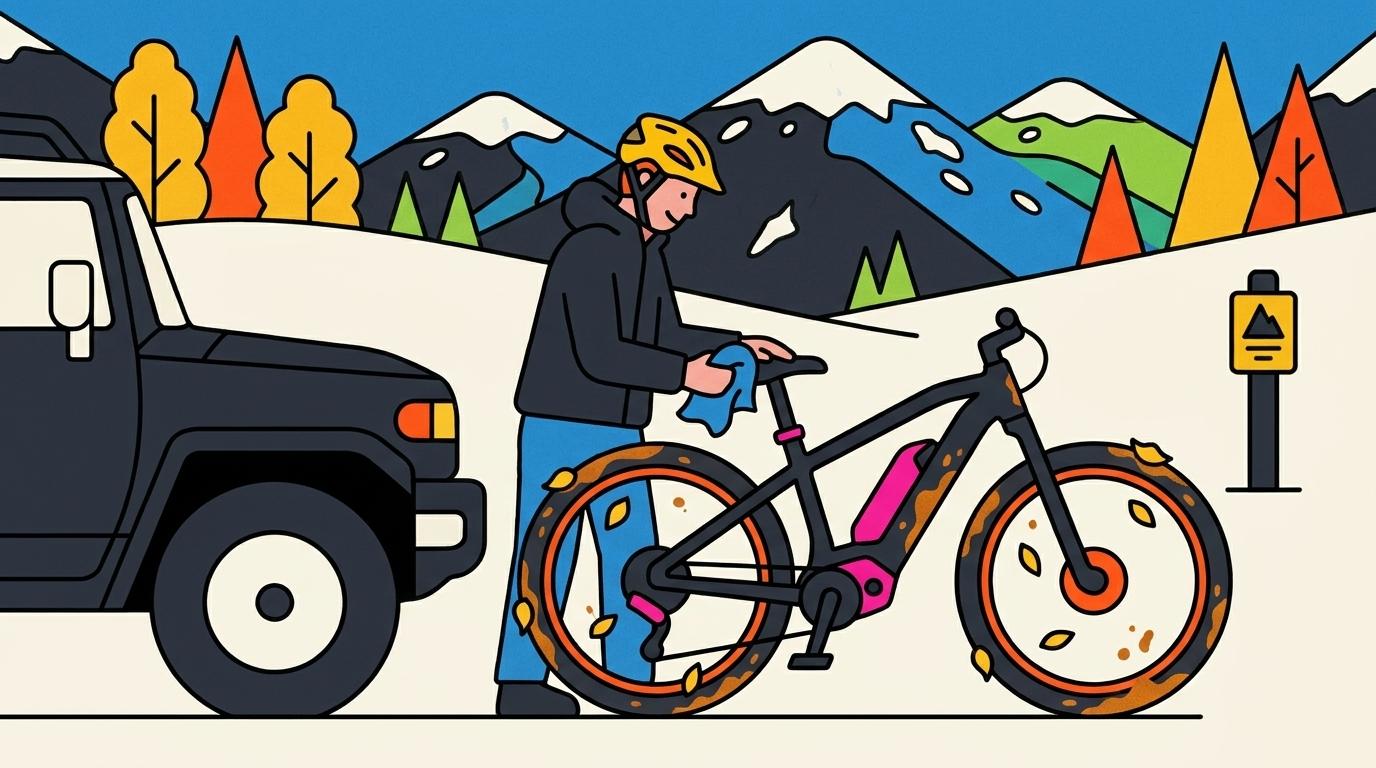
Start with a low-pressure rinse. A garden hose on a gentle setting, or even a bucket of clean water and a soft sponge, is usually enough to loosen mud and wash off mag-chloride without forcing water into motor seals, headset bearings, bottom brackets, or electrical housings.
Avoid pressure washers. They can drive water past seals that are designed for rain and splashes, not concentrated spray. That is especially risky around the motor area, wheel hubs, suspension pivots if your bike has them, and the battery mount.
Work from top to bottom so grit runs off the frame instead of getting dragged across it. Pay attention to these spots:
- The underside of the downtube
- The chainstays and rear triangle
- The battery cradle and mounting rail
- The cassette, derailleur, and jockey wheels
- The brake calipers and rotors
If mud is packed around the drivetrain, let water soften it first. Scrubbing dry grit across the chain and cassette only grinds it deeper into the metal.
Step 2: Electrical Integrity, Drying Contacts and Battery Care
Once the bike is clean, drying matters just as much as washing. Remove the battery if your model allows it, then wipe the battery case, mounting points, and electrical contacts with a clean, dry microfiber cloth. If there is visible moisture near the terminals, let everything air-dry fully before reinstalling.
Do not soak connectors or spray cleaner directly into contact points. A slightly damp cloth around the surrounding area is safer than flooding electrical parts. Most modern eBikes are built to handle weather, but weather-resistant does not mean moisture should sit in the system for days.
Snowmelt and slushy road spray are especially rough because they carry grit and road treatment into small gaps. After a wet ride, check:
- Battery contacts and the battery bay
- Charge port covers and seals
- Display mounts and control buttons
- Integrated light connections, if your bike has them
Step 3: Drivetrain Defense, Switching to High-Viscosity 'Wet' Lubes
Fall is a good time to change your chain lube strategy. Dry lubes work well in hot, dusty summer conditions, but once Colorado mornings get damp and roads stay wet longer in the shade, a higher-viscosity wet lube usually protects better.
Wet lube is thicker and sticks to the chain longer in moisture. That matters after a ride through leaf litter, puddles, or misty foothill weather, where a thin summer lube can wash off quickly. The tradeoff is that wet lubes collect more grime, so clean application is important.
Here is a simple approach:
- Dry the chain completely after rinsing.
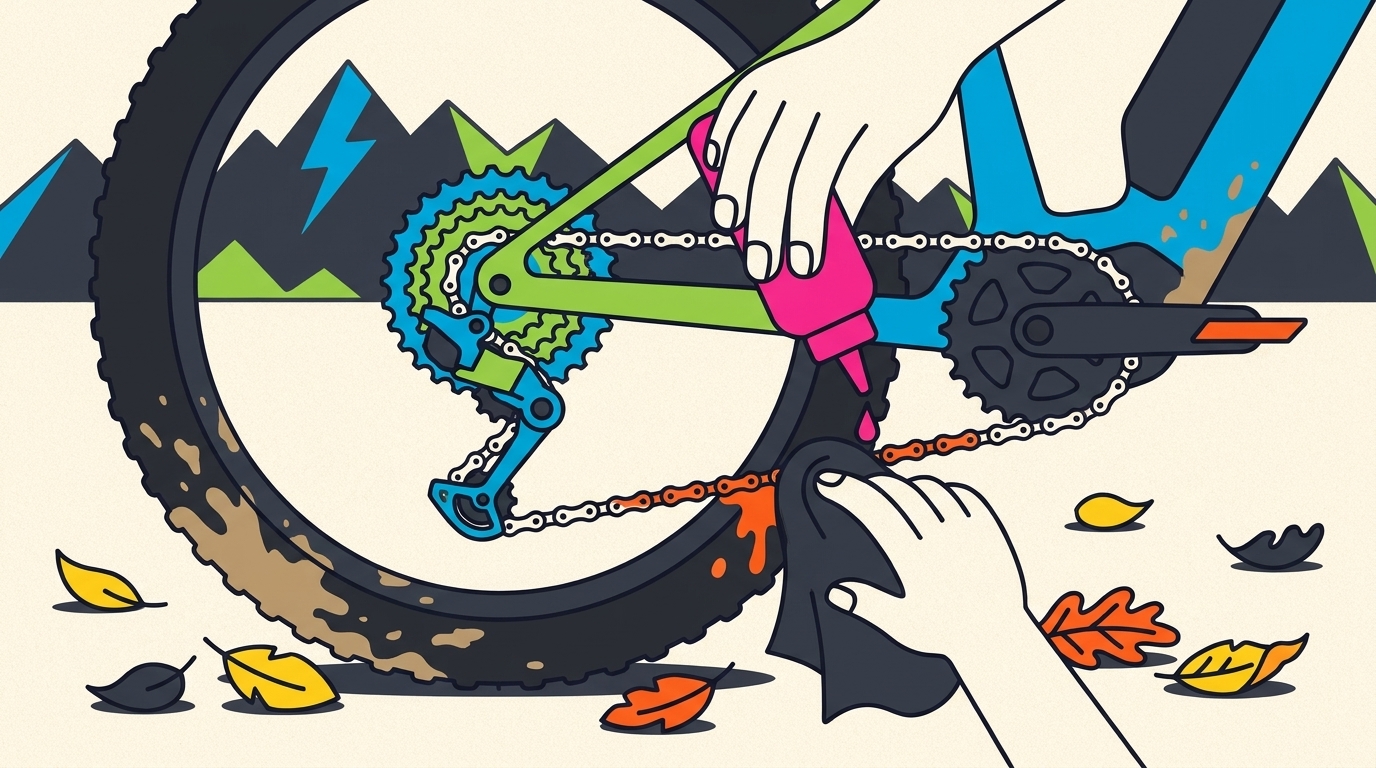
- Apply one small drop of wet lube to each roller while backpedaling.
- Let it sit for several minutes so it can penetrate.
- Wipe off the excess with a clean rag.
That last step is the one many riders skip. The lubrication you want is inside the chain rollers, not coating the outside where it attracts grit.
A seasonal comparison can help:
| Condition | Best lube type | What to watch for |
|---|---|---|
| Dry summer pavement and dust | Dry lube | Wears off faster in water |
| Damp fall rides and light slush | Wet lube | Collects grit if overapplied |
| Mixed shoulder debris and mag-chloride residue | Wet lube | Needs more frequent wipe-downs |
If your chain sounds noisy even after cleaning and lubing, check for wear before it starts chewing through the cassette. This is especially worth doing if you have been climbing and descending often in the foothills, or putting in longer sightseeing rides around places like Denver and Boulder.
Step 4: Brake Inspection After Steep Mountain Descents
Colorado descents are fun, but they are demanding on brakes. Long downhills heat up brake rotors and pads, and wet grit can accelerate wear fast. After any ride with sustained descending, especially in the mountains, give your braking system a close look.
Start with the basics. Spin each wheel and listen for rubbing, squealing, or a pulsing sound. Then inspect the rotors for heavy discoloration, visible warping, or oily contamination.
Next, check the pads. If pad material looks very thin, or braking feels weaker than normal, replace them before your next big ride. Steep mountain roads are not the place to discover you are down to metal backing plates.
Pay extra attention after rides in or near the high country. If you are exploring Estes Park and also planning scenic driving days on our Rocky Mountain National Park Car Tour or Estes Park Private Car Tour, you will notice how quickly conditions can shift between dry pavement, damp overlooks, and cold shaded stretches. Your brakes notice that too.
The Golden Rule of Winter Storage: Protecting Your Lithium-Ion Cells
If your fall rides are winding down, battery storage becomes the most important maintenance job of all. Lithium-ion cells age faster when left fully charged for long periods, and they can be damaged if stored in freezing conditions.
The sweet spot for most eBike batteries during storage is around 50 to 70 percent charge, kept in a dry, climate-controlled indoor space. Think closet, finished basement, or heated utility room, not an uninsulated garage or shed in a Colorado cold snap.
Here is the simple winter plan:
- Store the battery indoors at moderate temperature
- Leave it partially charged, around half to two-thirds full
- Check the charge every few weeks or once a month
- Avoid storing it empty or topped off at 100 percent
If the bike itself must stay in a garage, that is usually manageable if it is clean and dry. The battery is the part you want to baby. Bring it inside, keep the contacts clean, and reinstall it only when you are ready to ride.
For riders who prefer to swap icy miles for sightseeing when winter settles in, a scenic outing like the Pikes Peak & Garden of the Gods Private Car Tour can be a smart way to enjoy Colorado without putting your bike through freeze-thaw cycles.
Conclusion: Ready for the Next Adventure or the Spring Thaw
A Colorado fall ride can leave your bike wearing half the season, dust from a dry path, splash from a shaded underpass, and a trace of mountain road treatment all in one outing. A careful rinse, thorough drying, fresh wet lube, brake check, and smart battery storage routine will keep that mess from turning into expensive wear.
Good maintenance is really about protecting your next ride. Whether you are pedaling city paths, cruising beneath the Flatirons, or planning a future day out on our Denver's Best eBike Tour or Garden of the Gods eBike Tour, a clean and well-cared-for eBike is ready when Colorado gives you that perfect window of sun. Explore our tours and pick your next ride with confidence.
Frequently Asked Questions
Can I wash my eBike with a hose?
Yes, as long as the water pressure is gentle. A low-pressure rinse is safe for removing Colorado mud and road film, but avoid pressure washers and direct spray into bearings, the motor area, or electrical connections.
What is mag-chloride, and why is it bad for bikes?
Magnesium chloride is a road treatment used in cold weather. It helps manage icy conditions, but the residue attracts moisture and can speed up corrosion if it stays on your chain, bolts, rotors, or battery contacts.
Should I use wet or dry chain lube in Colorado fall?
For most damp fall riding, wet lube is the better choice because it stays on the chain longer in moisture. Just apply it sparingly and wipe off the extra so it does not turn into a grit magnet.
How should I store my eBike battery over winter?
Store it indoors in a dry, moderate-temperature space at about 50 to 70 percent charge. Do not leave it in a freezing garage for long periods, and do not store it completely empty.