Experience Rocky Mountain National Park: Your Complete Guide
Pete Averson
Rocky Mountain National Park is one of the crown jewels of the American national park system. Spanning over 415 square miles of dramatic mountain terrain, the park draws more than four million visitors each year — and for good reason. Towering peaks, pristine alpine lakes, wildflower-filled meadows, and abundant wildlife combine to create an experience that stays with you long after you leave.
As local guides who spend our summers exploring every corner of this park, we've put together this complete guide to help you plan an unforgettable visit.
What Makes Rocky Mountain National Park Special?
Unlike many national parks that are defined by a single iconic feature — a canyon, a geyser, a waterfall — Rocky Mountain National Park offers an extraordinary diversity of landscapes packed into a relatively compact area. In a single day, you can drive from montane forests at 7,500 feet through subalpine zones and above treeline to the alpine tundra at over 12,000 feet. Each elevation zone has its own distinct ecosystem, wildlife, and visual character.
The park contains 77 peaks above 12,000 feet, including Longs Peak at 14,259 feet — one of Colorado's famous fourteeners. There are over 150 lakes, 450 miles of streams, and countless waterfalls. It is, quite simply, one of the most spectacular places on Earth.
Trail Ridge Road: The Highway to the Sky
Trail Ridge Road is the park's most famous attraction and for good reason. This 48-mile scenic highway connects Estes Park on the east side to Grand Lake on the west side, climbing to a maximum elevation of 12,183 feet. For 11 continuous miles, the road sits above treeline, winding through alpine tundra with panoramic views that stretch to the horizon in every direction.
Driving Trail Ridge Road is an experience unlike anything else in the lower 48 states. You'll pass through multiple climate zones, each with its own vegetation and character. Below treeline, dense forests of Engelmann spruce and subalpine fir line the road. As you climb higher, the trees thin and shrink until they disappear entirely, replaced by the fragile tundra ecosystem — a landscape that looks more like the Arctic than Colorado.
### Key Stops Along Trail Ridge Road
- Many Parks Curve — One of the first major viewpoints, offering sweeping views of the park's eastern valleys
- Forest Canyon Overlook — A short walk from the parking area to a dramatic overlook of a glacially carved canyon
- Alpine Visitor Center — At 11,796 feet, the highest visitor center in the National Park System. Browse the exhibits, grab a snack, and step outside for 360-degree views
- Medicine Bow Curve — Stunning views of the Never Summer Mountains to the west
- Milner Pass — The Continental Divide crossing, where water on one side flows to the Atlantic and the other to the Pacific
Important note: Trail Ridge Road is typically open from late May through mid-October, depending on snow conditions. Check the park's website for current road status before your visit.
Alpine Lakes: Bear Lake and Sprague Lake
The Bear Lake area is the most popular section of the park, and it's easy to see why. Bear Lake itself is a stunning alpine lake at 9,475 feet, surrounded by dense forest with mountain peaks rising in every direction. The trail around the lake is just 0.8 miles — flat, paved, and accessible — making it one of the easiest and most rewarding walks in the park.
From Bear Lake, a network of trails leads to other gorgeous lakes:
- Nymph Lake — A half-mile hike through forest to a lily-pad-covered lake
- Dream Lake — Another half mile beyond Nymph Lake, with dramatic views of Hallett Peak
- Emerald Lake — The final lake in the chain, sitting in a stunning cirque basin
Sprague Lake is a quieter alternative that we highly recommend. This peaceful lake offers a flat, half-mile loop trail with spectacular mountain reflections and excellent wildlife viewing opportunities. It's wheelchair accessible and perfect for families with young children.
Wildlife: Moraine Park and Beyond
Rocky Mountain National Park is home to an incredible variety of wildlife, and Moraine Park is one of the best places to see it. This broad, open meadow on the park's east side is prime elk habitat, especially during the fall rut in September and October when bull elk bugle and compete for mates. It's one of the most dramatic wildlife spectacles in North America.
Throughout the park, you may also spot:
- Mule deer — Common throughout lower elevations
- Bighorn sheep — Often seen along the roads near Sheep Lakes and on rocky slopes
- Moose — Occasionally spotted in willow-lined valleys on the west side
- Marmots and pikas — These adorable alpine mammals live above treeline and are often heard before they're seen
- Black bears — Present but rarely seen; practice proper food storage
- Coyotes, foxes, and mountain lions — Present throughout the park
Best Times to Visit
Each season offers a different experience:
- Summer (June–August) — The most popular season. Trail Ridge Road is fully open, wildflowers bloom in the alpine meadows, and all facilities are operating. Expect crowds, especially at Bear Lake. Arrive before 8 AM or after 4 PM to avoid the worst congestion.
- Fall (September–October) — Our favorite time to visit. The aspen trees turn brilliant gold, elk rut in Moraine Park, and the summer crowds thin considerably. Trail Ridge Road usually closes in mid-October.
- Winter (November–April) — The park transforms into a snowy wonderland. Trail Ridge Road is closed, but the east side remains accessible for snowshoeing, cross-country skiing, and winter wildlife viewing.
- Spring (May–early June) — A transitional season with melting snow, rushing waterfalls, and emerging wildlife. Trail Ridge Road begins opening in late May.
Experience RMNP with Our Car Tour
Our Rocky Mountain National Park car tour is the ultimate way to experience the park without the stress of navigating on your own. Your expert guide will drive you through the park in a comfortable private vehicle, stopping at all the best viewpoints, sharing the park's natural history and geology, and helping you spot wildlife that most visitors drive right past.
The car tour is perfect for visitors who want to see as much of the park as possible in a single day, families with young children, and anyone who wants to relax and enjoy the scenery without worrying about driving on mountain roads.
Pair It with an Estes Park eBike Tour
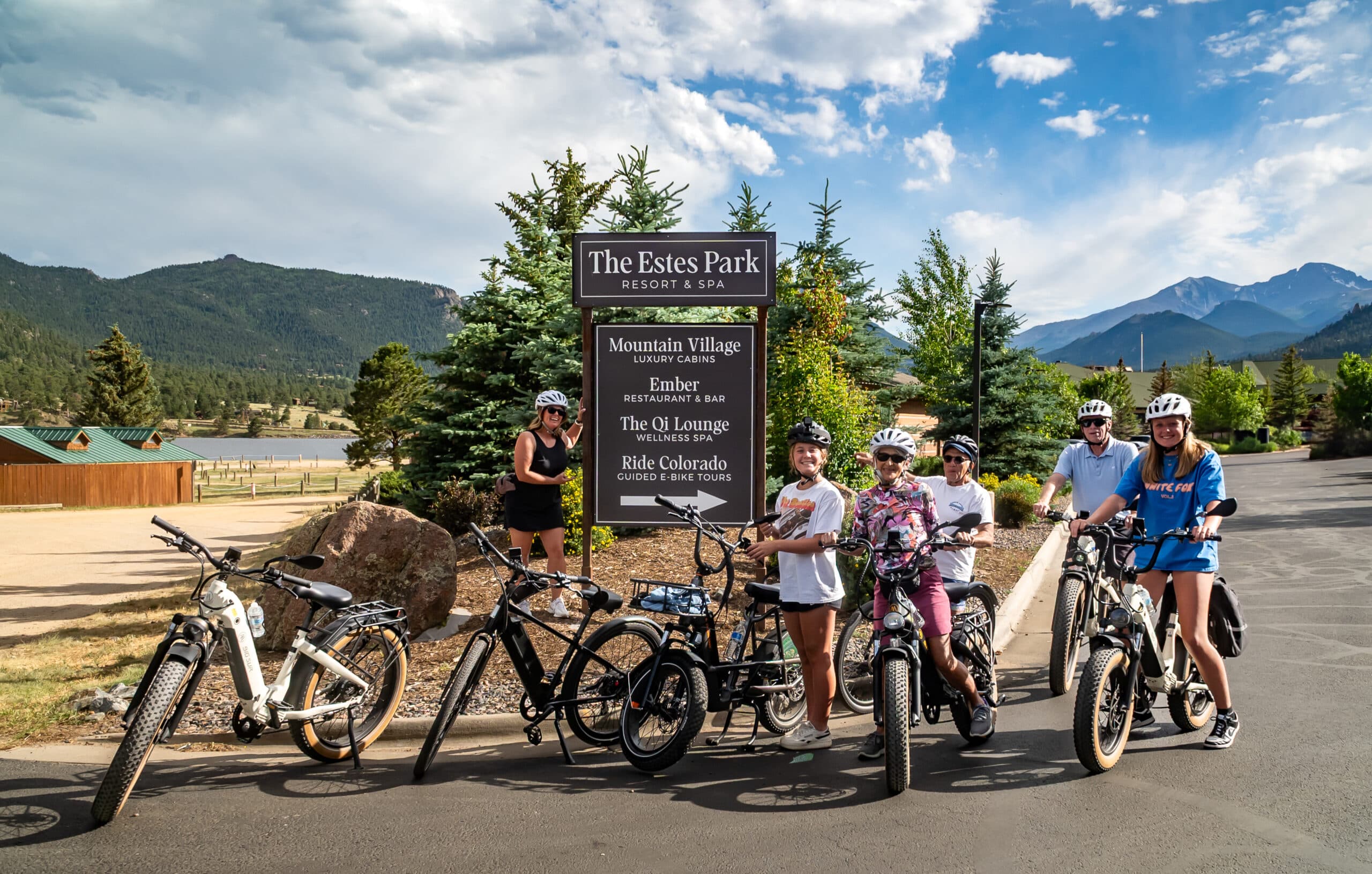
For the complete experience, we recommend pairing your RMNP car tour with our Estes Park eBike Tour. Spend the morning exploring the park by car, then cruise through the charming gateway town of Estes Park on an eBike in the afternoon. You'll see the Stanley Hotel, ride around Lake Estes, and discover the town's hidden gems — all with the mountains as your backdrop.
Plan Your Visit
Rocky Mountain National Park requires a timed entry reservation during peak season (late May through mid-October). Reservations are released in batches and go quickly, so plan ahead. The park entrance fee is $30 per vehicle, valid for seven days.
Ready to experience Rocky Mountain National Park with a local expert by your side? Visit iridecolorado.com to book your guided car tour or eBike adventure today. We'll handle the logistics — you just bring your sense of wonder.