Your Guide to Buying the Perfect E-Bike for Your Riding Style
Pete Averson
Buying an e-bike is one of the most exciting decisions you can make — whether you're looking to ditch your daily commute by car, explore scenic trails on the weekend, or simply enjoy the outdoors with a little extra pedal power. But with so many options on the market, finding the perfect ride for your lifestyle can feel overwhelming. This comprehensive guide will walk you through everything you need to know to make the right choice.
Key Factors to Consider Before You Buy
Before you start browsing models, it's important to think about how and where you'll be riding. The best e-bike for you depends entirely on your intended use, terrain, and personal preferences.
### Terrain and Riding Environment
Where you plan to ride is the single biggest factor in choosing your e-bike.
- City streets and bike paths — If you're commuting or cruising around town, a commuter or hybrid e-bike with thinner tires and a lighter frame will serve you well. These bikes prioritize efficiency and speed on pavement.
- Off-road trails and mountain paths — For rugged terrain, look for an electric mountain bike (eMTB) with front suspension, knobby tires, and a more powerful motor. Full-suspension models are ideal for aggressive trail riding.
- Beaches and sand — Fat-tire e-bikes with tires 4 inches or wider are designed to handle sand, snow, and loose gravel with ease. They're incredibly stable and versatile.
- Mixed terrain — If you want one bike that can handle a bit of everything, a fat-tire e-bike or an adventure-style hybrid is your best bet.
### E-Bike Styles
Understanding the main categories of e-bikes will help narrow your search:
- Commuter e-bikes — Sleek, lightweight, designed for daily transportation. Often include fenders, racks, and integrated lights.
- Fat-tire e-bikes — Built with oversized tires for maximum traction and stability. Great for all-terrain adventures.
- Foldable e-bikes — Compact and portable, perfect for apartment dwellers, RV travelers, or anyone with limited storage space.
- Electric trikes — Three-wheeled e-bikes that offer exceptional stability and cargo capacity. Ideal for riders with balance concerns or those who need to carry heavy loads.
- Electric mountain bikes — Purpose-built for off-road riding with robust suspension, powerful motors, and durable components.
### Fit and Weight
E-bikes are heavier than traditional bicycles, typically ranging from 45 to 75 pounds. Consider:
- Can you lift the bike onto a car rack or up stairs?
- Does the frame size fit your height and inseam?
- Is the step-over height comfortable for mounting and dismounting?
- Do you need a step-through frame for easier access?
### Regulations: Class 1 vs. Class 2
In the United States, e-bikes are generally classified into two main categories that affect where you can legally ride:
- Class 1 — Pedal-assist only, with a maximum assisted speed of 20 mph. These are allowed on most bike paths and trails.
- Class 2 — Includes a throttle in addition to pedal-assist, also capped at 20 mph. Some bike paths and trails restrict Class 2 e-bikes, so check your local regulations.
Most recreational riders and commuters will be perfectly happy with a Class 1 or Class 2 e-bike. If you want the option to ride without pedaling (using just the throttle), go with Class 2.
### Essential Features to Look For
Not all e-bikes are created equal. Here are the features that matter most:
- Motor power (250W–750W) — A 250W motor is sufficient for flat terrain and light commuting. For hills and off-road riding, look for 500W to 750W.
- Battery capacity (400Wh+) — A larger battery means more range. Most quality e-bikes offer 40–80 miles per charge depending on terrain, rider weight, and assist level.
- Hydraulic disc brakes — These provide superior stopping power compared to mechanical disc brakes, especially in wet conditions and at higher speeds.
- Suspension — Front suspension (hardtail) is great for moderate terrain. Full suspension adds rear shock absorption for rough trails.
- Display and controls — A clear LCD or LED display showing speed, battery level, and assist mode makes for a much better riding experience.
- Integrated lights — Essential for commuters and anyone riding at dawn or dusk.
How to Choose the Right E-Bike
With so many options, here's a step-by-step approach to finding your perfect match:
### 1. Identify Your Primary Riding Needs
Ask yourself: Will I ride mostly on paved roads, dirt trails, or a mix of both? How far will I typically ride? Will I need to carry cargo or a passenger? Your answers will point you toward the right category of e-bike.
### 2. Battery and Motor Considerations
Think about the range you need for your typical ride, plus a buffer. If your daily commute is 15 miles round trip, a battery with at least 40 miles of range gives you plenty of margin. For hilly terrain, prioritize motor power over range — a 750W motor will handle steep climbs much more efficiently than a 250W.
### 3. Prioritize Safety
Never compromise on braking quality. Hydraulic disc brakes are the gold standard for e-bikes. Also consider visibility features like reflective elements, integrated lights, and bright paint colors.
### 4. Think About Comfort Upgrades
A comfortable saddle, ergonomic grips, and adjustable handlebars can transform your riding experience. Many stock saddles are adequate but not great — upgrading your seat is one of the best investments you can make.
### 5. Test Ride Before You Buy
This is the most important piece of advice we can give. An e-bike that looks perfect on paper might not feel right when you're actually on it. Visit a local shop, take several models for a spin, and pay attention to how each one handles, accelerates, and brakes.
Ride Colorado Pro Tips
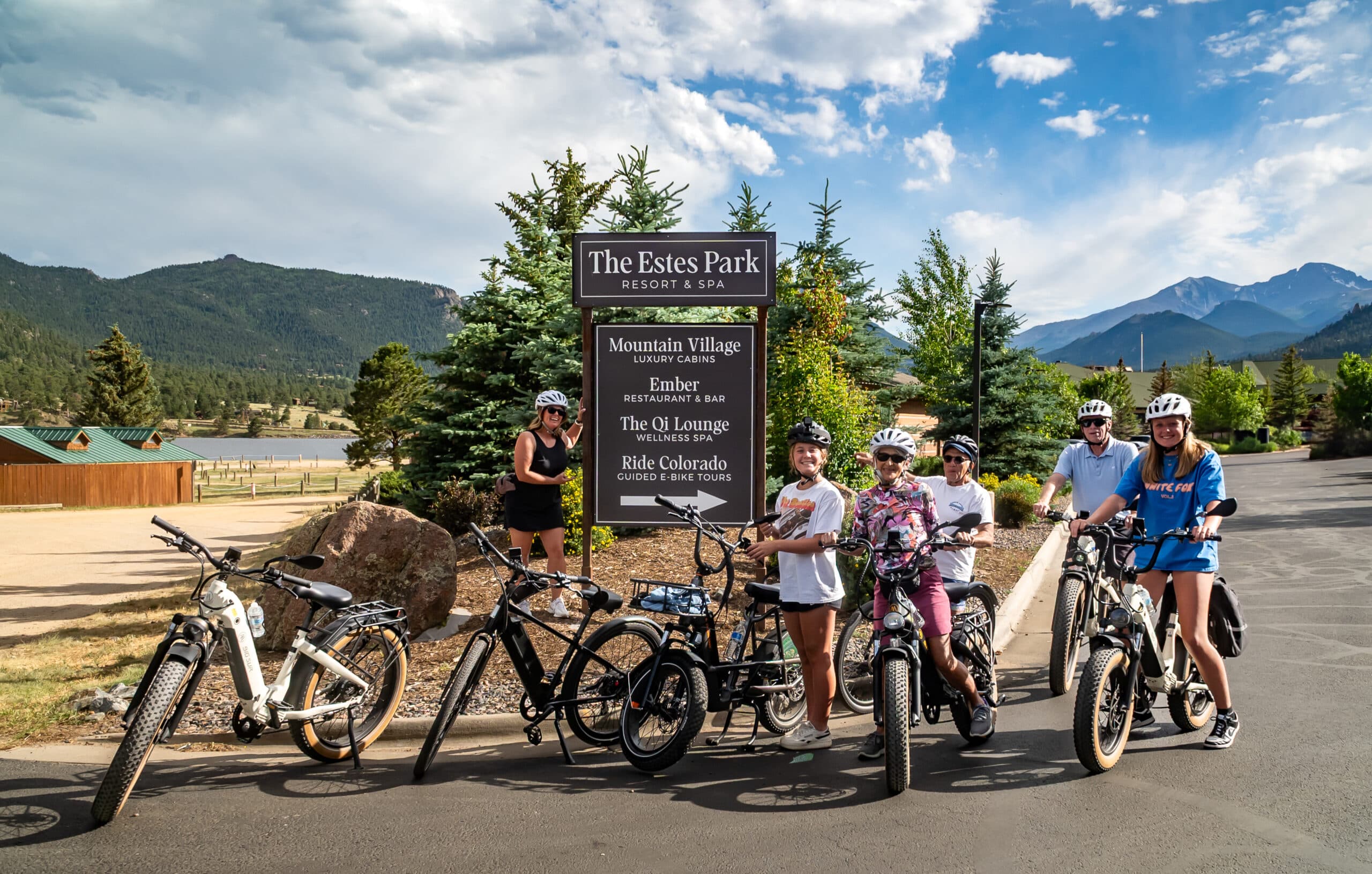
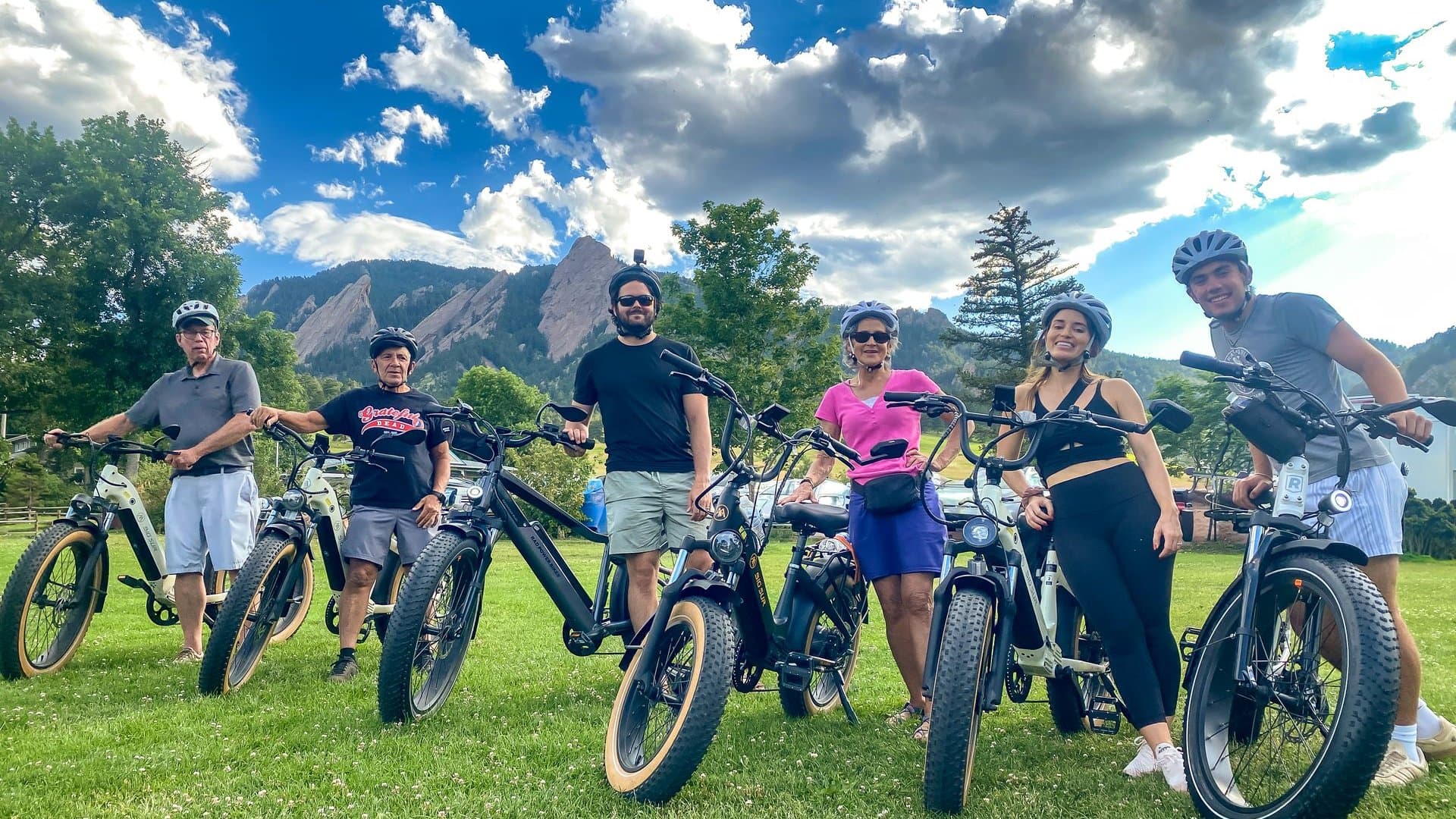
After thousands of miles guiding tours on e-bikes in Colorado, we've developed strong opinions about what works best. Here are our top recommendations:
### Our Top Picks
- Rad Rover 6 Plus — Our go-to recommendation for adventure riders. The fat tires handle everything from mountain trails to city streets, the 750W motor conquers Colorado's hills, and the build quality is excellent for the price. This is the bike we use on many of our own tours.
- Rad Runner — Perfect for urban commuters. It's compact, nimble, and has a low step-over height that makes it accessible for riders of all ages. The modular accessory system lets you customize it with racks, baskets, and passenger seats.
- Aima Big Sur — A budget-friendly option that doesn't sacrifice quality. Great for riders who want a reliable e-bike without breaking the bank. Solid battery life and a smooth ride at a fraction of the price of premium models.
### Gear We Recommend
- Comfort seat upgrade — Replace the stock saddle with a gel or memory foam seat. Your body will thank you on longer rides. We recommend the Cloud-9 Cruiser Select or the Selle Royal Respiro for maximum comfort.
- Abus lock — E-bikes are a theft target. Invest in a quality U-lock from Abus to protect your investment. The Abus Granit X-Plus 540 is virtually pick-proof and worth every penny.
- Hollywood car rack — If you plan to transport your e-bike by car, get a proper hitch-mounted rack rated for heavy bikes. The Hollywood Sport Rider SE handles e-bikes up to 80 pounds and fits standard 2-inch hitches.
Conclusion
Buying an e-bike is a decision that can genuinely change the way you experience the world around you. Whether you're looking to simplify your commute, explore new trails, or just have more fun outdoors, there's an e-bike out there that's perfect for your riding style.
The most important step is to test ride as many bikes as you can before making a decision. Every rider is different, and the best e-bike is the one that feels right when you're on it.
Ready to experience the thrill of an e-bike for yourself? Join us for a guided e-bike tour in Colorado and try out our premium fleet before you buy. Visit iridecolorado.com to book your ride today!